
How to Organize a Pantry: Shelves, Zones and Labels That Last
Published · 8 min read
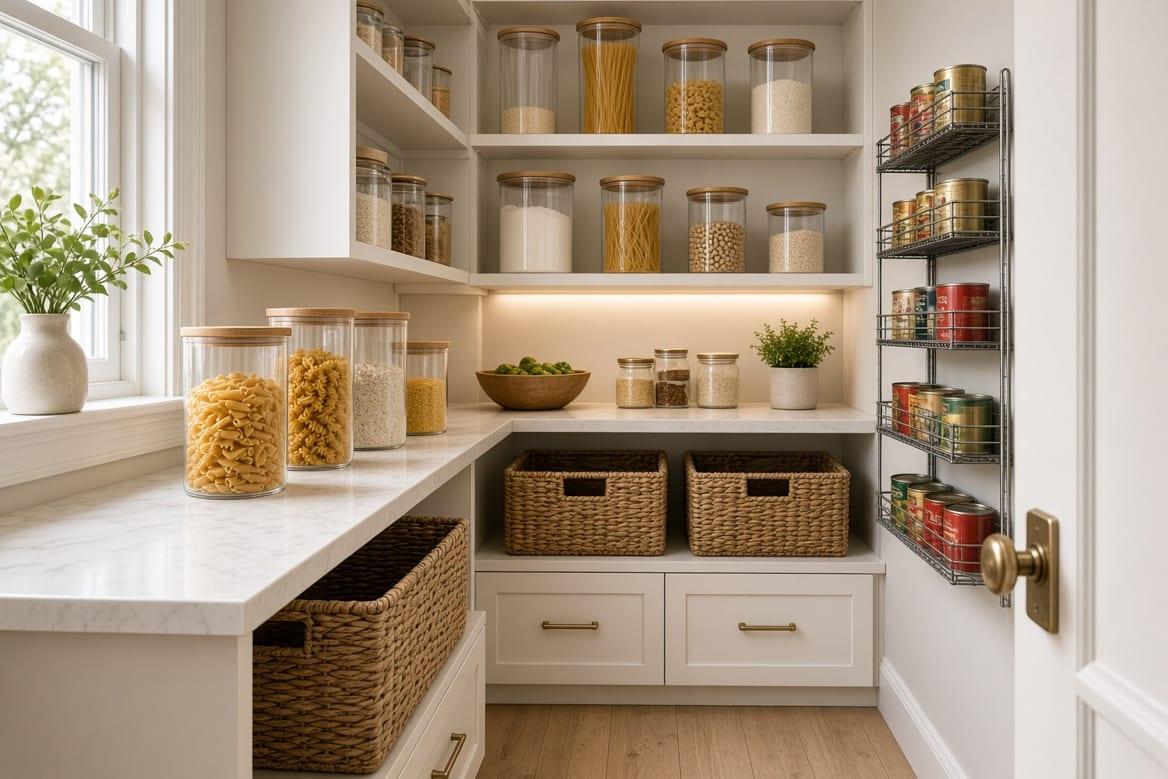
How to organize a pantry so it stays organized: give every kind of food a zone, put it at the height you'd reach for it, and make the oldest packet the one in front. Containers and labels help, but they're the last step, not the first. A pantry full of matching jars still fails if the pasta lives in three places.
This guide covers how to organize a pantry step by step, pantry zones and shelf heights, first in, first out, containers and labels, deep pantries, small pantries and kitchens with no pantry at all.
How to organize a pantry, step by step
- Take everything out. Put it on the kitchen table, grouped as you go. Wipe the shelves while they're bare.
- Check the dates. Toss what's past its use-by date, and what's open and stale. Put what's nearly due at the front of the table: that's this week's meals.
- Group by kind. Pasta and grains, tins, baking, breakfast, snacks, sauces and oils, spices. You'll see what you have too much of, and what you keep buying twice.
- Plan zones on the shelves before anything goes back (see below).
- Decant only where it helps. Containers for what comes in flimsy bags or draws pests. Original packets for the rest.
- Put it back, oldest in front. New things go behind or underneath, so you use the old first.
- Label the shelves and the containers. A label on the shelf edge tells everyone where things go back.
Pantry zones
A zone is a shelf, or part of one, for one kind of food. When the tins all live together, you see at a glance that you have six of tomatoes and none of beans.
- Everyday cooking. Pasta, rice, grains, tins of tomatoes and beans, stock. The shelf you use most.
- Baking. Flour, sugar, baking powder, yeast, chocolate, sprinkles. One shelf or one bin you can lift down onto the counter.
- Breakfast. Cereal, oats, spreads, coffee and tea. Near the front, near the kettle if you can.
- Snacks. In bins at the height of whoever is allowed to help themselves.
- Sauces, oils and vinegars. On a turntable, so the bottle at the back comes round.
- Spices. A tiered rack or a drawer, alphabetical if you cook a lot.
- Backstock. The second jar of peanut butter and the spare pack of pasta, on a top shelf, so you know it's there before you buy a third.
Pantry shelf heights
Where something sits matters as much as what it sits next to.
- Eye level (roughly shoulder to eye height): what you use every day. Everyday cooking, breakfast.
- Waist height: heavier things you use often, and baking supplies you lift down.
- Low shelves and the floor: heavy and bulky things. Bottled water, potatoes and onions in breathable baskets, the rice sack, pet food in a sealed bin.
- Top shelf: backstock, the big roasting tin, party paper plates, things you use a few times a year.
- Kid height: snacks and breakfast, if you want them to help themselves; nothing you don't, if not.
If the shelves are adjustable, set them to what's on them. Tins need 15 cm (6 inches) of height, cereal boxes 30 cm (12 inches) or more. Two shelves of tins fit where one sat before.
First in, first out
First in, first out is the habit that stops food going off at the back. When you unpack the shopping, older packets come forward and new ones go behind them. For tins, a tiered can rack or a rolling can dispenser does it for you: you load at the top and take from the bottom.
Write the date on what you decant. A strip of tape on the jar with the best-before date from the packet keeps the date when the packet goes in the bin.
Pantry containers and labels
- Airtight containers for flour, sugar, rice, pasta, cereal and oats. They keep food fresh and keep out pantry moths and weevils. If pests have been in a packet, everything near it goes into sealed containers.
- Square or rectangular, not round. They fit side by side with no wasted space.
- Clear, so you see how much is left. You'll notice the rice is low before it runs out.
- Bins for things that come in odd shapes. Snack bags, sauce packets, seasoning mixes. One bin per kind, with a handle so it slides out like a drawer.
- Labels on the shelf edge and on the container. The shelf label says what lives there, so things go back to the same place. The container label says what's in it and the date.
- Don't decant everything. Tins, jars and bottles are already good containers. Decanting them adds work and loses the date.
Deep pantry shelves
Deep shelves are where food goes to expire. Bring the back to the front:
- Bins you pull out like drawers. One per zone. Pull the bin, see everything, push it back.
- Turntables for bottles and jars. A turn brings the back row round.
- Risers for tins. A step riser lifts the back row so you see the labels.
- Nothing hidden behind something else. If you must stack two deep, put backstock of the same thing behind its twin.
Small pantry and no-pantry kitchens
In a small pantry, use every surface. A rack on the inside of the door holds spices, jars and wraps. Shelves can go higher than you think, with a step stool kept inside. Baskets hang under shelves for packets and bags.
With no pantry, choose one or two cabinets as the food cabinets and give them the same zones. A narrow rolling cart in the gap beside the fridge holds tins and oils. A freestanding shelf in a hallway or a laundry room can be a pantry, with bins and the same rules: oldest in front, everything labeled. Backstock can live further away, in the basement or a closet, as long as you know it's there.
Keep the pantry organized
A pantry stays organized with two small habits, not a big clear-out every spring.
- Unpack the shopping into the zones. Not onto the nearest shelf. If there's no room in a zone, that's a sign you have backstock to move up.
- A five-minute reset once a week. Before the big shop, pull the oldest things forward, push stray packets back to their zone and note what's running out.
- One spot for what's open. A small bin for open bags of chips, half-used packets and the last of the crackers, so they get finished first.
- Check the dates twice a year. Spices, baking powder and yeast lose strength long before they look old.
For organizing the rest of the kitchen, the cabinets, drawers and counters, see how to organize a kitchen.
Keep track of what's in your pantry
A well-organized pantry shows you what's there when you open the door. It can't tell you, at the shop, whether there's rice at home, and it can't remind you that the chicken in the freezer needs eating this week. That's where a list helps, and Hoardo is a free app that keeps one.

- Make a room for the kitchen, and one for the garage or basement if the backstock or a chest freezer lives there.
- Add each pantry shelf, bin or freezer drawer as a numbered box. "Pantry shelf", "Baking shelf", "Freezer drawers".
- List what's on it, with how many. Type it, say it, or take a photo of the shelf and let Hoardo list what it sees.
- Add best-before dates and alerts. Turn on "Notify me?" for a reminder before a date, and set an alert for when something is down to the last one or two.
Then you check from the shop instead of guessing, and Hoardo emails you when the oat milk is running low.

For a full pantry inventory with expiry reminders and a free template to start from, see pantry inventory. For where backstock and spare appliances can go, see basement storage ideas, and for the rest of the house, storage ideas for every room.
Questions about organizing a pantry
What is the best way to organize a pantry?
By zones: one shelf or bin for each kind of food, like everyday cooking, baking, breakfast, snacks and backstock. Put what you use daily at eye level, heavy things low and backstock on top, with the oldest packets in front.
How do I organize a deep pantry?
Bring the back to the front. Use bins that pull out like drawers, turntables for bottles and jars, and step risers for tins, so nothing hides behind something else.
Should I put everything in pantry containers?
No. Decant flour, sugar, rice, pasta, cereal and oats into airtight containers, which keep food fresh and pests out. Tins, jars and bottles are fine as they are, and keeping them in their packaging keeps the date.
How do I organize a pantry with no pantry?
Pick one or two cabinets as the food cabinets and give them the same zones. Add a slim rolling cart beside the fridge for tins and oils, or a freestanding shelf in a hallway or laundry room, and keep backstock in a closet or the basement.
How do I keep track of what's in my pantry?
Keep a list with how many of each and their best-before dates. In Hoardo each shelf is a numbered box, a reminder comes before a date runs out, and an alert tells you when something is down to the last one. The pantry inventory guide has a free template.
Is Hoardo free?
Yes. Hoardo is free, with every feature included: rooms, numbered boxes, reminders, search and sharing with your household. There's no paid plan.