
How to Organize a Laundry Room: Storage Ideas for Any Size
Published · 8 min read
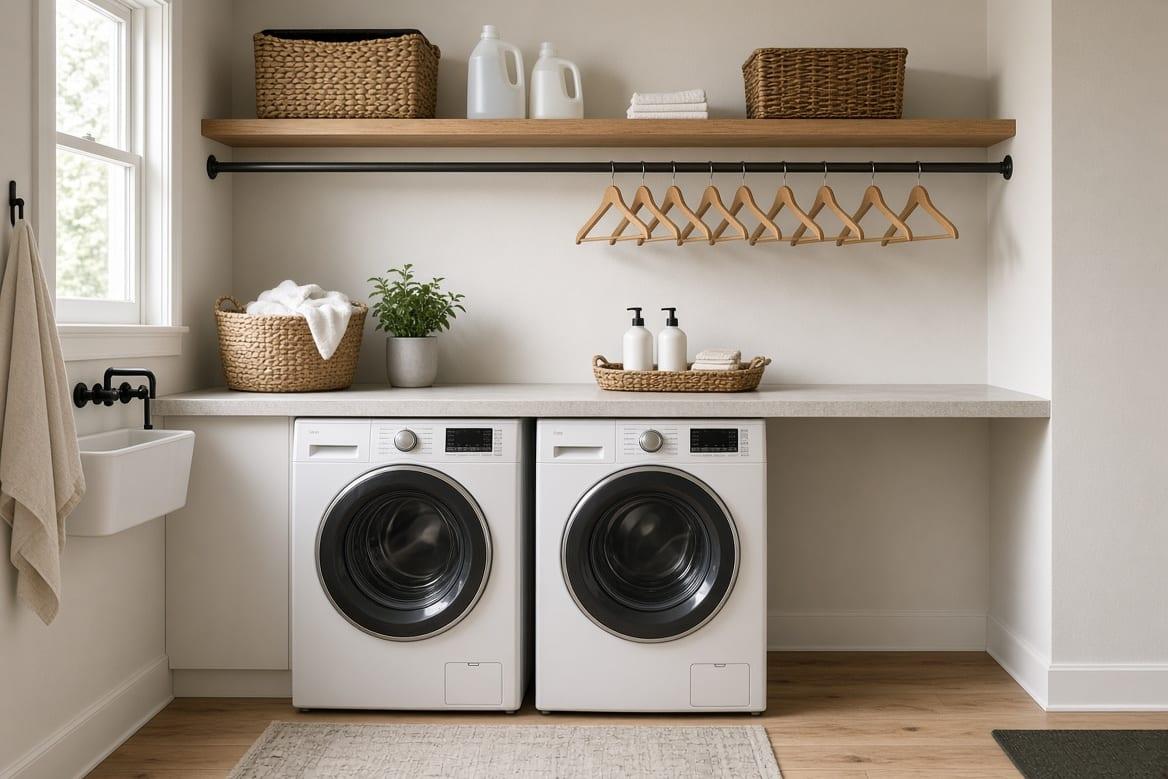
How to organize a laundry room comes down to one thing: making each step of laundry happen in its own place. Dirty clothes go in, wash, dry, get folded and leave. When there's no spot for sorting, no surface for folding and nowhere to hang the shirts, the laundry room becomes a second floor for clean clothes.
This guide covers how to organize a laundry room in an afternoon, storage ideas for the space above the machines, a sorting system that saves a step, drying and folding in a small room, cleaning supplies, and how to keep detergent pods and chemicals safe.
How to organize a laundry room in an afternoon
- Empty the shelves and the top of the machines. Half-used bottles, single socks, the screwdriver someone left there.
- Throw out what's empty, dried up or unused. The stain remover you bought twice, the fabric softener nobody likes.
- Group what's left by step: washing, stain treatment, drying, ironing, and cleaning supplies that aren't for laundry at all.
- Put the daily things within reach of the washer. Detergent and stain remover at arm's height, right above or beside the machine.
- Move the rarely used things up high. Spare bottles, the iron, seasonal items.
- Set up a flow. Baskets in, machines, a place to fold, a place to hang, baskets out.
Laundry room storage ideas
Above the machines
- One or two shelves above the washer and dryer. The most useful space in the room. Leave enough room to open a top-loader's lid, and keep the lowest shelf within reach.
- Baskets or bins on the shelf. One for stain treatment, one for spare bottles, one for odd socks. Bins stop small things falling behind the machines.
- A cabinet with doors if there are children at home or if the shelf looks cluttered. Closed doors keep detergent out of sight and reach.
- A tension rod or hanging rail under the shelf for hangers, so shirts go straight from the dryer onto a hanger.
Sorting
- A divided hamper. Two or three sections: darks, lights, delicates or towels. Clothes get sorted as they go in, so washing day starts with a full load ready.
- One basket per person for clean clothes, so folding ends with everyone's pile in their own basket.
- A small bin for what's in pockets. Coins, receipts and hair ties end up here, not in the drum.
- A lost sock basket. Odd socks wait a month for their match, then they go.
Drying and folding
- A folding counter on top of front-loaders. A board or counter over side-by-side machines doubles as a folding table.
- A wall-mounted drying rack that folds flat, for sweaters and things that shouldn't go in the dryer.
- A retractable clothesline across the room, pulled out only when it's needed.
- A fold-down ironing board on the wall or the back of the door, instead of one leaning against the wall.
Small laundry rooms and closets
- Stack the machines. A stacked washer and dryer frees floor and wall for a narrow cabinet or a hamper.
- A slim rolling cart for the gap between the machines and the wall. Bottles fit in a cart 15 cm (6 inches) wide.
- Hooks and racks on the back of the door for the ironing board, a lint roller and reusable bags.
- Doors that close. In a laundry closet, everything is on show. Matching bins and doors that shut make it look like a cupboard.
A laundry sorting system that saves a step
Most homes sort laundry twice: once into piles on the floor before washing, and again into people's piles after folding. A good system does each sort once, at the moment it's easiest.
- Sort dirty clothes where they come off. A two-section hamper in each bedroom, or in the bathroom, means clothes arrive already split into darks and lights. On washing day you carry a load, not a heap.
- Pick categories you actually wash separately. For most households that's darks, lights and towels. Add delicates only if you wash them on their own cycle.
- Treat stains on the way in. Keep the stain remover by the hamper, not on the shelf, so a stain gets treated when it's fresh.
- Fold straight into each person's basket. Clean clothes leave the laundry room already sorted, and each person puts away their own.
- Pick a laundry day per load type, if the household is big: towels on Monday, darks on Wednesday. Small loads every day can work too; what matters is that the hamper never overflows.
Small laundry rooms and laundry closets
A laundry closet behind folding doors, or a washer in the kitchen or bathroom, has no room for a sorting station or a counter. Go up instead: a shelf or a cabinet as high as the ceiling allows, with the things you use weekly on the lowest shelf and spares above. Put a narrow cart in the gap beside the machines, hooks on the inside of the doors, and fold on the bed or the kitchen table rather than squeezing in a counter.
If the washer and dryer are front-loaders, a pedestal or a sturdy platform under them gives you a drawer or a shelf for baskets, and you bend less to load them. In a basement or garage laundry room, keep everything off the floor in case of a leak, and keep cardboard boxes away from the damp.
What not to do in a laundry room
- Don't let the top of the dryer become a shelf. It vibrates, things fall behind it, and the lint filter is underneath.
- Don't keep more spare bottles than you'll use in a few months. Detergent takes up a lot of shelf, and buying in bulk only saves money if you know it's there.
- Don't store clean clothes in the laundry room. It's a stop on the way, not a closet.
- Don't block the machines' access. You'll need to pull them out for the hoses and the vent.
Cleaning supplies in the laundry room
The laundry room is often the house's cleaning cupboard too. Keep laundry things and cleaning things apart: laundry on the shelf above the washer, cleaning supplies in a cabinet or a caddy you can carry from room to room. A caddy with the everyday cleaners in it saves trips, and the spare bottles stay on the shelf.
Never store bleach next to ammonia-based cleaners, and never mix them: together they make a toxic gas. Keep everything in its original, labeled container.
Laundry room safety
- Detergent pods out of children's reach and sight. Pods look like sweets to small children and are dangerous if bitten or swallowed. Keep them in their closed container, on a high shelf or in a cabinet with a lock, and close the lid after every use.
- All detergents and chemicals up high when there are children or pets in the house, not under the sink.
- Clean the dryer's lint filter after every load. Lint is flammable, and a full filter makes the dryer work harder.
- Close the washer and dryer doors when they're not in use, so children and pets can't climb in.
- Nothing stacked against the dryer's vent and nothing piled on a running machine.
Keep track of the laundry room
The laundry room is mostly open shelves, so there isn't much to lose. Where it helps is the stock: knowing you've got another bottle of detergent before you buy a third, and where the spare things went. Hoardo is a free app where every shelf, cabinet and bin is a numbered box with a list of what's on it.

- Make a room for the laundry room, and one for each other place you keep supplies.
- Add the shelf above the washer as a numbered box, and the cabinet and bins too.
- List what's on it, with how many. Type it, say it, or snap a photo of the shelf and let Hoardo list what it sees.
- Set a low-quantity alert on what you run out of. Tell Hoardo to let you know when the detergent is down to one bottle, and it will, before washing day finds the bottle empty.
For the rest of the house's cleaning things and spares, see under-stairs storage ideas and bathroom storage ideas, and the full list of storage ideas for every room.
Questions about laundry room organization
How do I organize a small laundry room?
Go up: shelves or a cabinet above the machines, a stacked washer and dryer if you can, a slim rolling cart beside them and hooks on the back of the door. Fold on top of front-loaders, and keep only what you use in the room.
What should go on the shelf above the washer?
What you use every wash, within reach: detergent, stain remover and fabric softener, with spares and rarely used things on a higher shelf. Bins or baskets stop small things falling behind the machines.
How do I organize a laundry closet?
Use the full height with a shelf or cabinet up to the ceiling, put a narrow cart in the gap beside the machines and hooks on the inside of the doors. Matching bins and doors that close make it look tidy, and you can fold on a table nearby.
Where should I store detergent pods?
In their original closed container, up high or in a cabinet children can't open, and out of sight. Close the lid after every use. Pods look like sweets to small children and are dangerous if bitten or swallowed.
How do I set up a laundry sorting system?
Sort as clothes come off, into a divided hamper with sections for darks, lights and towels. Treat stains when they go in, and fold straight into one basket per person so clean clothes leave the room already sorted.
Is Hoardo free?
Yes. Hoardo is free, with every feature included: rooms, numbered boxes, low-quantity alerts, QR labels and search. There's no paid plan.